
Motion
Motion is Entrust's automated facial biometric check. It's built to catch deepfakes and synthetic identities, two attack types that simpler photo or video comparisons struggle with: a static photo or a recorded video clip can be faked, but a live, responsive head turn is far harder to fabricate convincingly in real time.
How it works
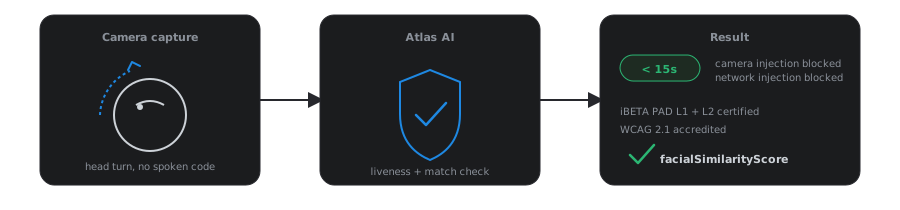
The user is asked to turn their head in front of the camera. Entrust's biometric engine, Atlas AI, uses this movement to confirm both that the face matches the document photo and that a live person, not a photo, video replay, or synthetic rendering, is in front of the camera. The whole check completes in under 15 seconds, with no spoken numbers or codes involved, unlike the older video liveness check.
Motion is built to resist two specific attack types:
- Camera injection - presenting a screen, photo or pre-recorded video to the camera instead of a live face.
- Network injection - tampering with the video stream itself, for example using deepfake software, so what reaches Entrust's servers is already manipulated.
It's certified to iBETA's presentation attack detection standard at both level 1 (basic spoofing, such as printed photos) and level 2 (more advanced attacks, such as masks and screen replays), and is trained on over a decade of diverse global biometric data, with Entrust's in-house Fraud Lab continuously generating new synthetic attack patterns to keep the detection models current. It's also accredited against WCAG 2.1 for accessibility.
Using it from eID Hub
Set report: documentFacialSimilarityMotion to run a document check alongside Motion. The check is delivered through the same Onfido Web SDK session as any other report; integrating Motion doesn't require any additional setup beyond choosing this report type.
Completion data
The result includes a facial similarity score between 0 and 1, where 1 is a perfect match, alongside the usual extracted document fields. See Usage.
Testing
Motion follows the same sandbox simulation rules as the main provider: see Testing for the firstName/lastName mechanism, including the facial similarity breakdown triggers.