
Proof of address
Proof of address verifies a person's address by reviewing an uploaded document, rather than an ID document. It's a separate report type from the document and facial checks: where those confirm who someone is, proof of address confirms where they live.
Supported documents
Entrust accepts a wide range of address documents. The validity window (how recently the document must have been issued) varies by document type and country group:
- Bank or building society statements (3-6 months depending on country)
- Utility bills covering electricity, water, gas, broadband or landline (3-6 months)
- Local government tax letters (6-12 months)
- Benefits letters (6-12 months)
- Mortgage statements (up to 1 year)
- Mobile phone bills (6 months, select countries)
- Insurance or brokerage statements (6 months)
- Pension or property tax statements (up to 1 year)
- Identity documents with address (varies)
- Accommodation or tenancy certificates (6 months)
- Vehicle logbooks (UK only)
Some document types are only accepted for specific countries. For the full list with exact validity windows and country restrictions, see Entrust's proof of address documentation.
How it works
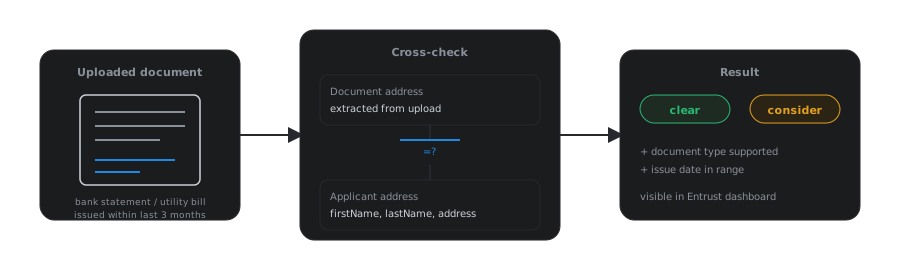
Entrust cross-checks the address the applicant provided against the address printed on the uploaded document. It also confirms the document itself is a supported type and that its issue date falls within the three-month window. The result comes back as clear, consider, or null, and is also visible in the Entrust dashboard, so you can build decisioning automation around it on top of (or instead of) the eID Hub completion data.
Using it from eID Hub
Set report: proofOfAddress. Unlike a document check, firstName, lastName and address (street, town, postcode, country, plus state for US addresses) are all required, since they're matched against the document rather than just shown for display. If any of these are missing, eID Hub rejects the request with a bad parameters error rather than starting the transaction.
Completion data
The result confirms whether the address matches, whether the document is a supported type, and whether the issue date is within range. See Usage.
Testing
Proof of address follows the same sandbox simulation rules as the main provider: see Testing for the firstName/lastName mechanism.